Skouries Project


COPPER-GOLD MINING PROJECT

A landmark investment

The Skouries project, which is part of the Kassandra Mines, is located on the Halkidiki peninsula in northern Greece. This copper-gold porphyry deposit will be mined using a combination of surface and underground mining technologies, alongside the best-in-class sustainable practices. Based on the 2021 Feasibility Study, the initial life of the mine is approximately 20 years, and it is expected to produce on average 140,000 ounces of gold and 67 million pounds of copper per year.

As of March 31, 2026, overall project progress was approximately 94% complete. First production of copper-gold concentrate is expected toward the third quarter of 2026, with commercial production expected in the fourth quarter of 2026.

Once operational, it will place Greece among the top gold-producing countries in Europe. Greece will also become a significant producer of copper contributing to the transition of the EU to a circular economy.
Download the Skouries Project Brochure PDF

Key Facts

LOCATION

NE Halkidiki

TYPE/PROCESSING METHOD

Open pit & underground

EXPECTED MINE LIFE

20 years

DEPOSIT TYPE

Copper-gold porphyry

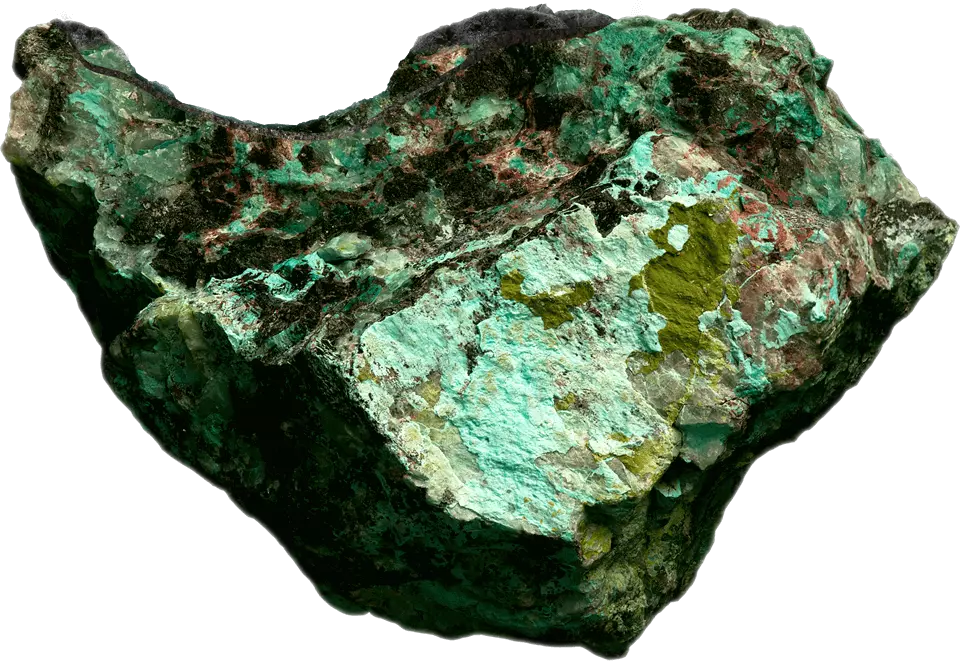
Copper
Cu
Copper

Av. annual copper production

67 million pounds
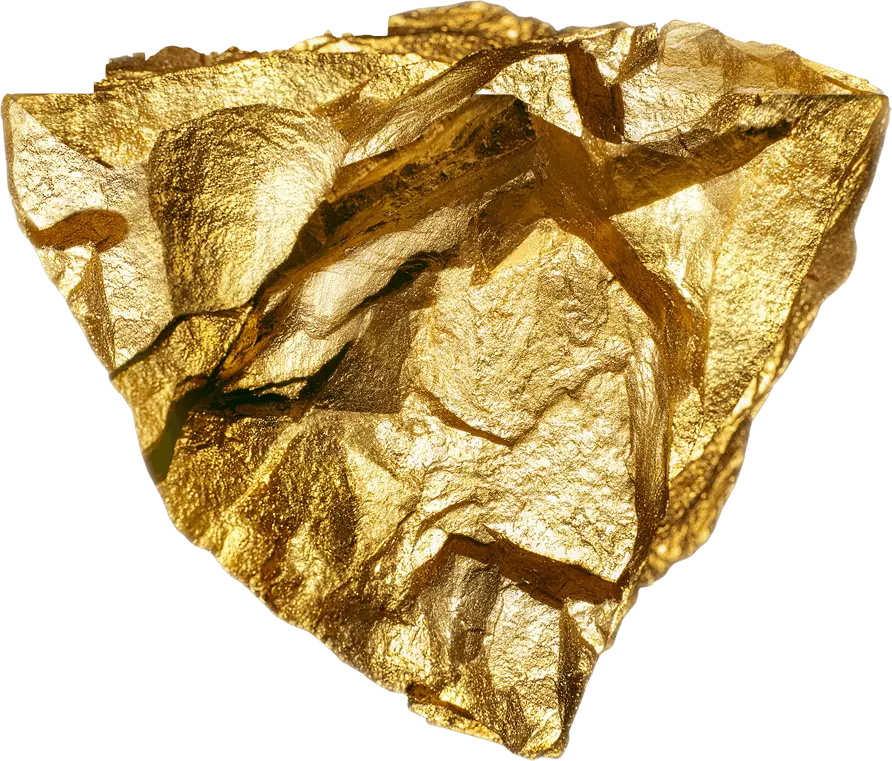
Gold
Au
Gold

Av. annual gold production

140,000 ounces

DECEMBER 2025

Advancing Skouries

As of March 31, 2026, overall project progress was approximately 94% complete. First production of copper-gold concentrate is expected toward the third quarter of 2026, with commercial production expected in the fourth quarter of 2026.

Concentrate commercial terms remain agreed and final offtake contract negotiations are in progress. With robust market conditions for copper gold concentrates continuing in 2026, we remain confident of achieving significantly stronger terms than those assumed in the 2022 feasibility study assumptions.

As execution activities have progressed and the project advances toward construction completion on schedule, the Company has updated its forecast-to-complete and, as a result has revised its estimate of total project capital for phase 2 to approximately $1.315 billion. This reflects an incremental $155 million related to labour, project and support overheads and materials costs across multiple work fronts and foreign exchange impacts. Additional contractor resources have been and continue to be required to sustain momentum. Since mid Q1 2026 when the onsite workforce totaled approximately 2,350 employees and contractors, workforce levels have increased to over 3,200 currently, including the addition of specialized EU-based contractors. This expanded workforce has supported continued progress across critical work fronts. The total workforce is expected to remain above 3,200 throughout the second quarter of 2026, followed by a planned and significant reduction in onsite labour in the third quarter as construction is completed, contractors are demobilized, and staffing levels normalize to support steady-state operations as the project transitions from construction into operations.

The project remains fully funded through operating cash flow, cash and debt financing. The Term Facility totalling €680.4 million ($782.3 million) is fully drawn (and the Contingent Overrun Facility of €60.0 million remains undrawn).

Project capital totalled $135.6 million in Q1 2026 and as of March 31, 2026, cumulative project capital invested towards Phase 2 of construction totalled $1.116 billion.

The accelerated operational capital cost estimate for Skouries has increased to approximately $260 million, reflecting an incremental $82 million investment focused on expanded pre-commercial underground and open-pit mining. These activities are supporting continued growth of the ore stockpiles ahead of first production, further advancement of the underground mine and advancing the site general earthworks. This incremental capital supports a smooth ramp-up into production.

The Company is well positioned for start-up, with over 2.8 million tonnes of ore stockpiled which provides the entire planned mill tonnage for 2026. Open pit and underground ore mining will continue for the balance of 2026 and will be blended to maximize cash flow with lower value ore being stockpiled for future years.

As at March 31, 2026, overall project progress was approximately 94% complete.

Primary Crusher Building

The primary crusher is mechanically complete and all associated equipment is set in position, with work underway on the final piping and electrical installation. Conveyors from the primary crusher through the coarse ore stockpile to the process plant have been installed and belt installations are underway.

The stockpile dome foundation is complete, and assembly of the dome structure is virtually complete. All three reclaim feeders and associated chute work have been installed and work is underway to complete the final mechanical, piping and electrical connections in the stockpile reclaim tunnel. Electrical cable installation and terminations are in progress in the prefabricated electrical distribution room.

Process Plant

Work in the process plant remains focused on mechanical installations, piping, cable tray and cabling in preparation for first ore introduction. Q1 2026 inspections identified the need to replace the two damaged cyclone feed pumps variable speed drives. Temporary replacement equipment has been ordered and is expected to be installed in Q2 2026 with permanent equipment in Q3 2026. High and medium voltage electrical distribution from multiple substations within the process plant network are advancing, and the process control building structure is complete with electrical work underway across all plant areas. Electrical rooms are being progressively handed over to commissioning.

During the period, the compressor systems, blower systems and the process and fire water pumping systems achieved construction completion and have been handed over to the commissioning team. The reagent areas are advancing in line with the commissioning plan through various stages of mechanical, piping and electrical installations.

Thickeners

Two of the three tailings thickeners are mechanically complete, with electrical cabling and instrumentation installation underway. The third tailings thickener is not required for start-up.

Water testing is complete and piping installations have advanced as the pipe rack installations are completed. Work is advancing on the associated infrastructure, including the pumphouse building with piping and electrical work nearly complete, and mechanical and electrical installations in the flocculant building progressing. Electrical installations and cable pulling in the thickeners’ secondary substation building are well advanced.

Filtered Tailings Facility

Work continues to progress on the filtered tailings plant which remains on the critical path, with electrical installations and commissioning as the final steps. Work is also advancing on the tailings handling infrastructure.

Mechanical work advanced with all six filter presses and associated swivel doors, feeders and conveyors completed. The compressor building steel structure is complete, and all six compressors and air receivers are mechanically complete. Pipe installation continues to progress and cable tray installations are substantially complete. Electrical and instrumentation work is complete on filter presses 1 and 2 and progressing through the remaining four filter presses.

The filter plant tank farm construction has progressed with all five tanks now complete and structural steel for pipe racks and platforms advancing to support piping installations. The clarifier water tank construction is fully welded and currently being painted following the successful hydrotest. The clarifier is assembled and the bridge assembly is being preassembled for installation.

The prefabricated electrical distribution room has been installed, with cable tray and electrical installation advancing.

Powerline and Substations

The 150kV powerline, and primary substation are advancing in accordance with the project schedule to support start-up in Q3 2026. Final approval from the electrical regulatory authority, which is required prior to commissioning, is expected following completion of the required inspection and energization protocols in late Q2 or early Q3.

Powerline construction is advancing with the transmission tower assembly complete and pilot wire pulling now underway along the transmission line. Work in the primary substation has advanced through ongoing assembly of the substation structures and control building structural completion.

Pre-commissioning of the power infrastructure for the plant has started with the substations that distribute power to the process plant, filter plant, and primary crusher. Commissioning continues in the fire, utility, and process water systems. Pre-commissioning for the SAG and Ball mill instrumentation, electrical and control systems has started. Pre-commissioning started in the flotation area with focus on air and instrumentation for the flotation cells. Wet commissioning has started for the process-water pumps and tailings thickeners.

Integrated Extractive Waste Management Facility (the "IEWMF")

Preparation works for the initial tailings placement area is progressing, with engineering fill continuing in the first part of Q2 2026.

Construction of the low-grade ore stockpile continued advancing with the planned sequence focused on the lower section.

Excavation of the southern diversion trench is ongoing and ramping up in the more favorable dry season.

Open Pit Mining

The open pit mine continued to ramp up during Q1 2026 and remains ahead of plan in building ore stockpiles for the process plant start-up. The open pit team delivered 877 kt of ore to stockpiles during Q1 2026. At the end of Q1 2026 the stockpiles contained approximately 2.3 million tonnes of open pit and underground ore. The stockpile metal content is approximately 84,000 ounces of gold and 24 million pounds of copper. Grade control drilling of the open pit phase 1 has been completed.

Underground Development

The underground mine delivered 140 kt of ore to the ore stockpiles during Q1 2026. Underground access development rates continued to accelerate. A total of 1,333 meters of underground development was completed in Q1 2026. The monthly advance during March 2026 was 607 meters, a step up towards the approximate 700 meters per month we are targeting during the remaining months of the year. The underground ventilation system has been upgraded enabling ventilation of the 350 level where the remaining four test stopes will be mined this year.

The second test stope was completed with ore fragmentation, stope cavity monitoring and extraction exceeding expectations. Development of both the east and west declines continues, and development to access the next four test stopes started in Q2 2026.

Based on the successful completion of the first two test stopes, the Company has the opportunity to expand the stope design to support greater productivity, with the planned four larger test stopes designed at approximately 100 kt per stope.

Processing

Three of the four processing operations and maintenance teams have successfully completed their theoretical training and are now completing job familiarization training at both Skouries and Olympias sites. The fourth team will commence theory training in Q2 2026. Several key readiness activities are advancing according to plan. Procurement of maintenance spares is advancing on plan for completion in Q2, consignment stock agreements are in place with the main OEM’s and the tailings placement design has been completed. Twelve highly experienced process plant ramp-up experts have been contracted to support the operations team during the first three months of operations.

Workforce

As at March 31, 2026, there were approximately 3,000 personnel working on site, including 450 Skouries employees.

Play button

Social and economic benefits

The Project is designed in line with responsible mining principles and it is expected to create economic and social value at a local and national level.

Its construction will involve a plethora of operations and the supply of significant quantities of materials and services which will boost local hiring, procurement and employment. Specifically, the project will involve new investments of over $1 billion with more than 1,700 positions required during construction.

The construction works at Skouries started in the summer of 2023 and will continue for approximately 3 years. First production is expected in the first quarter of 2026, with commercial production expected in mid-2026.

Best-in-class technologies and environmental design

The mine will incorporate advanced digital technologies throughout its operations, with leading practices in technology, exploration and mining, safety and environmental protection. The development of the project involves integrating leading environmental and social practices in our industry that ensure long-term positive impacts for all, such as the Integrated Extractive Waste & Water Management System, Filtered Tailings Technology, Backfilling, Parallel Rehabilitation and Environmental Monitoring.

The Integrated Extractive Waste & Water Management Facility includes the:

  • Construction of the new filtered tailings management facility
  • Construction of a new water treatment plant with a high grade of responsiveness to extreme weather conditions and the potential to provide clean water for irrigation to the local community.

Benefits of filtered tailings

Geotechnical stability

Up to 90% of the water is removed from the tailings using filtration. These solids are then conveyed and compacted within the storage facility to form a geotechnically stable solid, improving safety and stability and mitigating geotechnical risks.

Recycled water

Dry stack technology helps water to be recycled and reused in the production cycle, which minimizes the consumption of fresh water.

Smaller area occupied for tailings

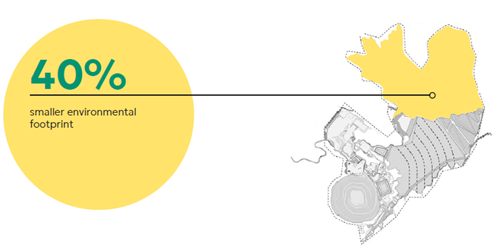
Use of only one downstream embankment rather than two originally planned, resulting in 40% reduction in the environmental footprint compared to the initial design, thus an area of 486,000 square meters at the Lotsanikos basin remaining undisturbed.

Benefits of dry-stack tailings


Other sustainable practices and technologies

Protection of Water and Facilities

The Water Management Sustems offer:

• Reduced consumption via targeted projects such as filtering and recycling.
• A reduction in groundwater inflows by pre-draining waters and re-injecting them into the aquifer.
• Diversion of surface waters from the mine via water diversion channels.
• Treatment of water which comes into contact with mining activities at the mine water treatment plant and re-use in day-to-day operations.

Recycling and repurposing tailings (backfilling)

The majority of open pit excavated materials are repurposed for constructing Dry-Stack Tailings Facilities, water treatment ponds and other structures. Any excess materials will be repurposed for the gradual rehabilitation of tailings sites. Tailings will also be repurposed as underground and open pit mining backfill materials to restore the previous landscape.

Parallel environmental rehabilitation

The rehabilitation of conventional liquid tailings sites is normally possible after the end of a mine’s lifetime. Filtered tailings technology, however, enables progressive reclamation of the site in parallel with mining activities. That means that the site will be rehabilitated and ready to
hand back to the local community sooner after the end of mining activity.

Comprehensive Environmental Monitoring Programme

Hellas Gold has engineered and already uses one of the most comprehensive environmental monitoring programs in Europe. The Environmental Monitoring Program tracks air, soil and water quality, noise, seismicity and ecology across 500 data points to provide real-time, continuous and accurate assessment of ongoing environmental performance.

SKOURIES PROJECT

Best-in-class environmental design

Play button

Geology & Mineralization

The Skouries porphyry copper-gold deposit is centred on a small (less than 400m in diameter), pencil-porphyry stock that intruded schist and gneiss of the Paleozoic Vertiskos Formation of the Serbo-Macedonian Massif, NE Greece. Mineralization extends for more than 920m depth from surface.

The porphyry is characterized by at least four intrusive phases that are of probable monzonite to syenite composition, but contain an intense potassic alteration and related stockwork veining that overprints the original protolith.

Potassic alteration and copper mineralization also extend into the country rock; approximately two thirds of the measured and indicated tonnes and 40% of the contained metal are hosted outside the porphyry.

The potassic alteration is syn- to late-magmatic in timing and is characterized by K-feldspar overgrowths on plagioclase, secondary biotite replacement of igneous hornblende and biotite, and a fine-grained groundmass of K-feldspar-quartz with disseminated magnetite.

Four main stages of veining are recognized: 1) an early stage of intense quartz-magnetite stockwork; 2) quartz-magnetite veinlets with chalcopyrite ± bornite; 3) quartz-biotite-chalcopyrite ± bornite-apatite-magnetite veinlets; and 4) a localized, late stage set of pyrite ± chalcopyrite-calcite-quartz veins. The host porphyry and potassic alteration at Skouries were coeval and formed during the Early Miocene.

SKOURIES

Virtual tour of our copper-gold asset

SKOURIES PROJECT GALLERY

/

SKOURIES: A VIDEO OVERVIEW

Presentation of the Skouries project (2022)

Play button